
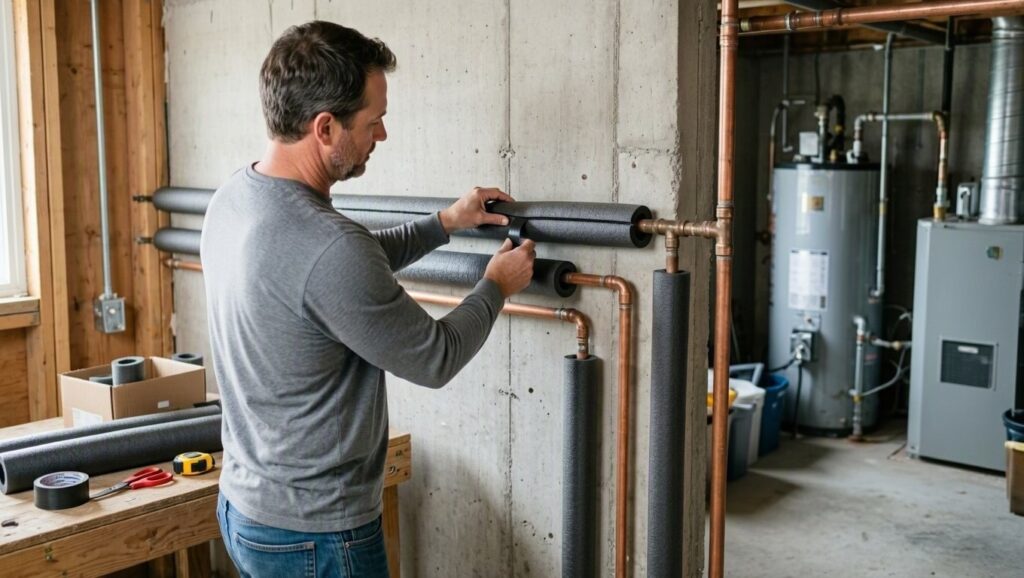
Most burst pipes in the Lower Mainland happen during short, sharp cold snaps, but a little preparation before winter can help prevent them. Because our winters are usually mild, homes often have poorly insulated pipes running through crawl spaces, garages, and exterior walls. During the January 2024 cold snap, restoration companies across the region received a flood of calls about burst pipes. After 20 years of cleaning up water damage in Surrey, Langley, White Rock, and across the Lower Mainland, we’ve seen how quickly frozen pipes can cause serious damage.
Why Do Frozen Pipes Burst in Cold Weather?
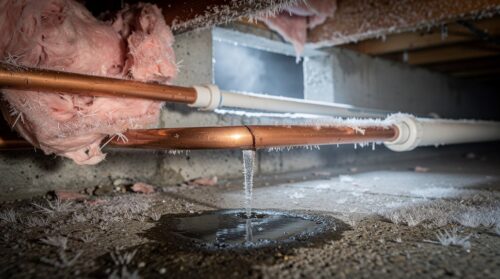
Frozen pipes can burst because water expands by about 9% when it turns to ice. As ice forms inside a pipe, it can trap water between the frozen section and a closed tap. Pressure builds in that trapped section until the pipe eventually splits, sometimes in an area that never froze. Both metal and plastic pipes can burst under this pressure, especially older pipes that have already weakened from corrosion.
Most homeowners don’t notice the damage until temperatures rise and the ice begins to thaw. While the pipe is frozen, the ice may block water from escaping through the damaged section. If a tap stops working after a cold night, it could mean a pipe has frozen. Check for signs of freezing and take action before the temperature rises and water starts leaking.
Which Pipes in Your Home Freeze First?
The pipes running through spaces your furnace doesn’t heat are usually the ones that freeze first. In Lower Mainland homes, these are the usual trouble spots:
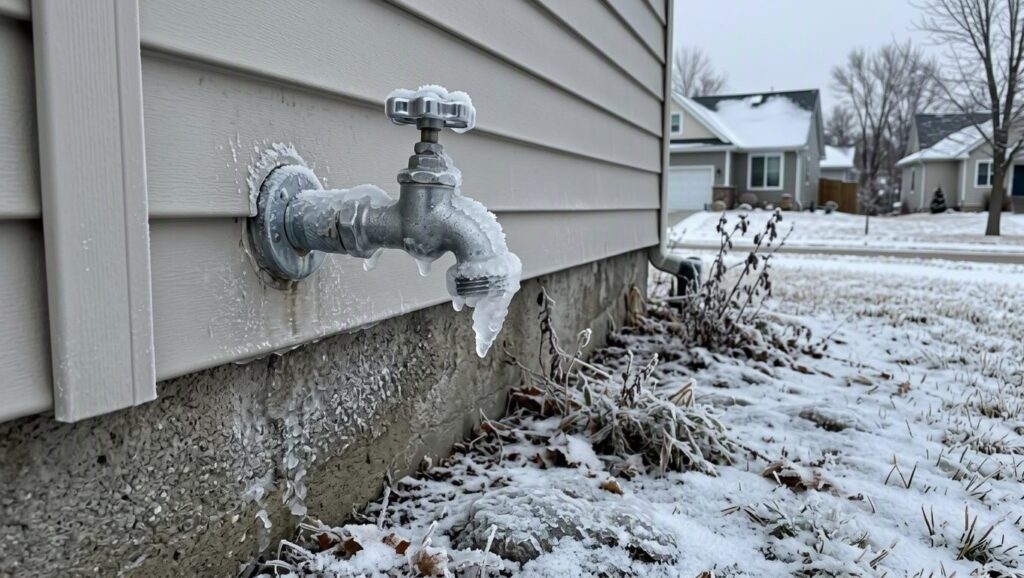
- Outdoor taps and hose bibs are usually the first to go, especially if a garden hose is still attached.
- Pipes in crawl spaces and unheated garages and attics sit in air that’s almost as cold as it is outside.
- Supply lines under kitchen and bathroom sinks on exterior walls lose heat quickly because the cabinet doors keep warm air away from them.
- Pipes near gaps around dryer vents, cable lines, or where the water line enters your home can freeze even when the rest of the house is warm.
Wind matters as much as temperature, and a pipe sitting in a cold draft can freeze well before a protected one. There is no single temperature at which pipes begin to freeze, since insulation, drafts, exposure, and how long the cold lasts all play a part. A windy Arctic outflow night is when we’d check these areas first.
How Do You Prevent Frozen Pipes Before a Cold Snap?
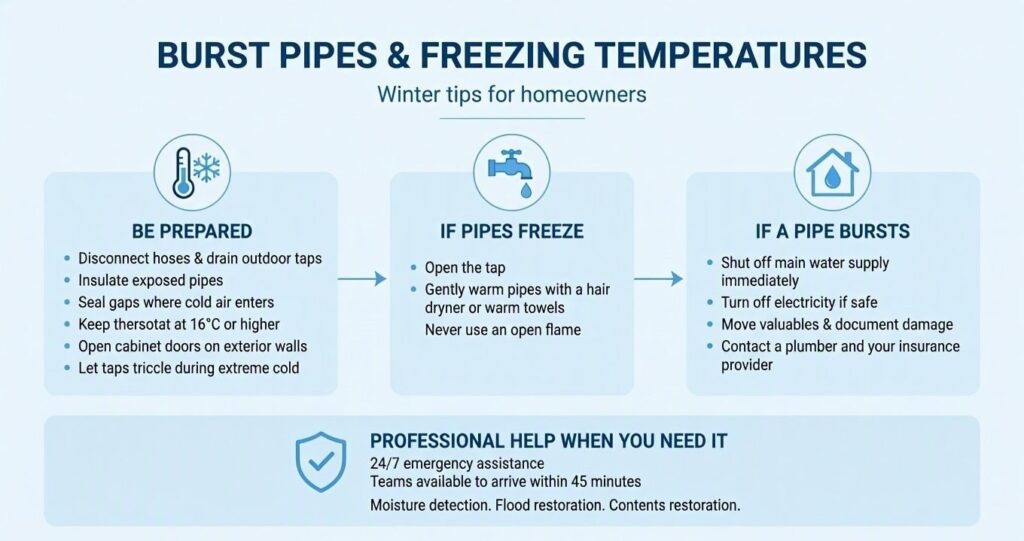
You can prevent most frozen pipes with an afternoon of work in the fall:
- Find your main water shut-off and tag it so anyone in the house can close it quickly. It’s usually where the water line enters your home, often in the basement, crawl space, garage, or near the hot water tank.
- Disconnect your garden hoses, then shut off and drain your outdoor taps from the inside valve if you have one.
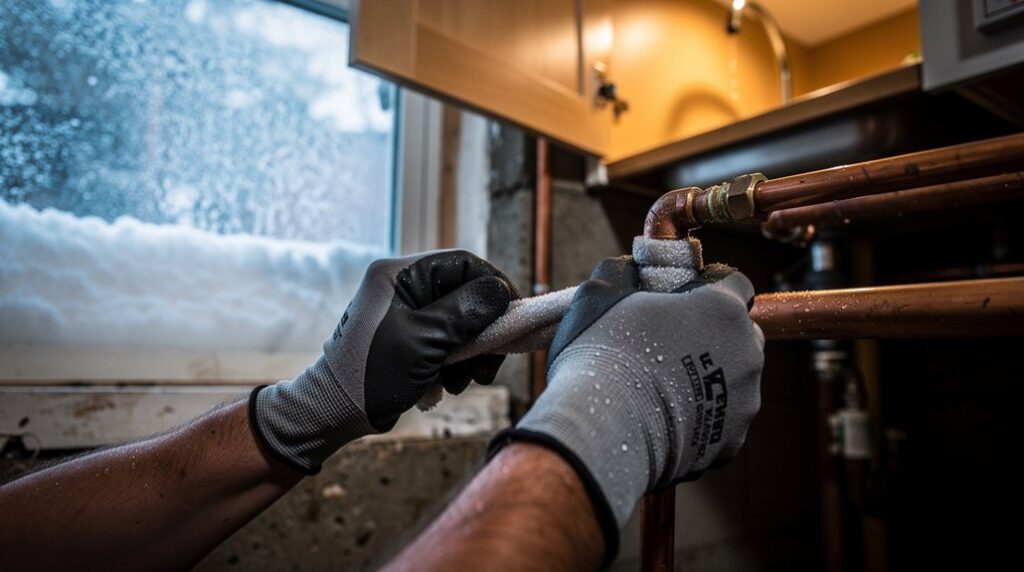
- Wrap exposed pipes in crawl spaces, garages, and along exterior walls with foam pipe insulation from any hardware store.
- Seal drafts around pipe openings and dryer vents with caulking or spray foam, but don’t seal crawl space vents without checking first, since some are needed for ventilation.
- Open the cabinet doors under sinks on exterior walls during a cold snap so warm air can reach the pipes.
- Keep your thermostat at 16°C or higher, including overnight and while you’re away.
- Let a pencil-thin trickle run from one or two taps connected to your most vulnerable pipes, such as those on exterior walls or in unheated spaces, when a hard freeze is in the forecast.
If you’re planning to be away during winter, contact your insurance broker to confirm your policy’s requirements. Some policies require regular inspections of your home or specific precautions to prevent frozen pipes. Failing to meet these conditions could affect your coverage.
How Do You Find and Safely Thaw a Frozen Pipe?
If you turn on a tap and only get a trickle, or nothing at all, a pipe has likely frozen somewhere along that line. A frozen pipe may already have ruptured, so make sure you know where your main shut-off valve is before you start. Here’s how to find the frozen section and thaw it safely:
- Check the pipes that connect to that tap, especially where they run along exterior walls, through the crawl space or into the garage. Frost on the pipe or a small bulge usually marks the frozen section.
- Open the tap before you start so the melting water has somewhere to go and the pressure can release.
- Warm the pipe with a hair dryer or towels soaked in hot water, starting at the tap end and working back toward the frozen section. Any electrical heating device, including a hair dryer, must be used safely and kept away from water and flammable materials.
- Watch closely for leaks as the ice begins to thaw. If you see water or suspect the pipe has split, shut off your main water valve and call a plumber.
- Keep going until full water pressure returns, then test your other taps, since more than one pipe may have frozen.
Never use a propane torch or any open flame. If the frozen section is inside a wall, or you can see a crack or bulge, shut off your main valve before it thaws and call a plumber.
What Should You Do First When a Frozen Pipe Bursts?
When a frozen pipe bursts, shut off your main water valve right away to stop the flow. The longer the water runs, the further it spreads into your drywall, flooring, and insulation. Once the water is off:
- Open your lowest taps to drain the water still sitting in the lines.
- Switch off power to the affected area at your electrical panel if water is near outlets or appliances, as long as you can reach the panel without standing in water.
- Move furniture, electronics, rugs, and boxes out of the wet area.
- Soak up what you can with towels, buckets, or a wet-dry vacuum.
- Take photos and video of the damage and the burst pipe before anything is cleaned up or thrown out, because your insurance adjuster will want to see them.
- Call a plumber to repair the pipe, then call your insurance company to open a claim.
Water travels behind walls and under floors, and anything left wet for more than a day or two can start growing mould. When you call Taylor Restoration, you’ll speak with someone who understands the urgency of your situation. We provide 24-hour emergency response and work quickly to get experienced technicians on site to help minimize further damage. We also use moisture meters and infrared cameras to find the water you can’t see. We’ll dry your home out properly through our flood restoration service and save as many of your belongings as we can with contents restoration. We can provide the documentation, photographs, moisture readings, and detailed reporting your insurance company may require, helping make the claims process as straightforward as possible. Your insurer may suggest a company from its own list, but the choice of who restores your home is yours. If a pipe has burst, contact us or call (604) 619-0559 any time.
Questions Often Asked
What Causes Burst Pipes in Winter?
Burst pipes in winter are caused by water freezing inside the pipe and expanding, which builds up more pressure than the pipe can hold. Pipes in crawl spaces, attics, garages, and exterior walls are most at risk, especially when they’re not insulated. The leak usually shows up once the pipe thaws, so insulating early is the best protection you have.
How Many Faucets Should You Drip During a Freeze?
In most homes you only need to drip one or two taps, not every tap in the house. Pick the taps fed by your most vulnerable pipes, such as those on exterior walls or in unheated spaces, plus the tap farthest from where your water line enters the house, and let each one run a pencil-thin trickle. Moving water is much harder to freeze, and the open tap lets pressure escape if ice does form. The cost of that water is tiny next to the cost of drying out a flooded basement.
How Long Does It Take Pipes to Freeze?
How long it takes pipes to freeze depends on the temperature, the wind, and where the pipe runs. At 0°C outside, pipes in the heated part of your home are rarely at risk, because the air around them stays warmer than the outdoor temperature. The exact temperature varies with insulation, drafts, exposure, and how long the cold lasts. Uninsulated pipes in unheated spaces are the most vulnerable, and many plumbers estimate they can freeze in six to eight hours of steady cold. A cold wind blowing through a gap in an exterior wall speeds that up, while foam insulation can buy you extra hours.
What Temperature Should You Keep a House at to Prevent Pipes From Freezing?
We recommend keeping your thermostat at 16°C or higher all winter, including overnight and when you’re away. Some guides say 13°C is enough, but that leaves very little margin for pipes in exterior walls and crawl spaces during an Arctic outflow. Even at 16°C, pipes in exterior walls, crawl spaces, and other exposed areas can still freeze, so the thermostat setting is not a substitute for insulating them. If you’ll be away for more than a few days, contact your insurance broker to confirm your policy’s requirements, since some policies require regular inspections or specific precautions to prevent frozen pipes.