
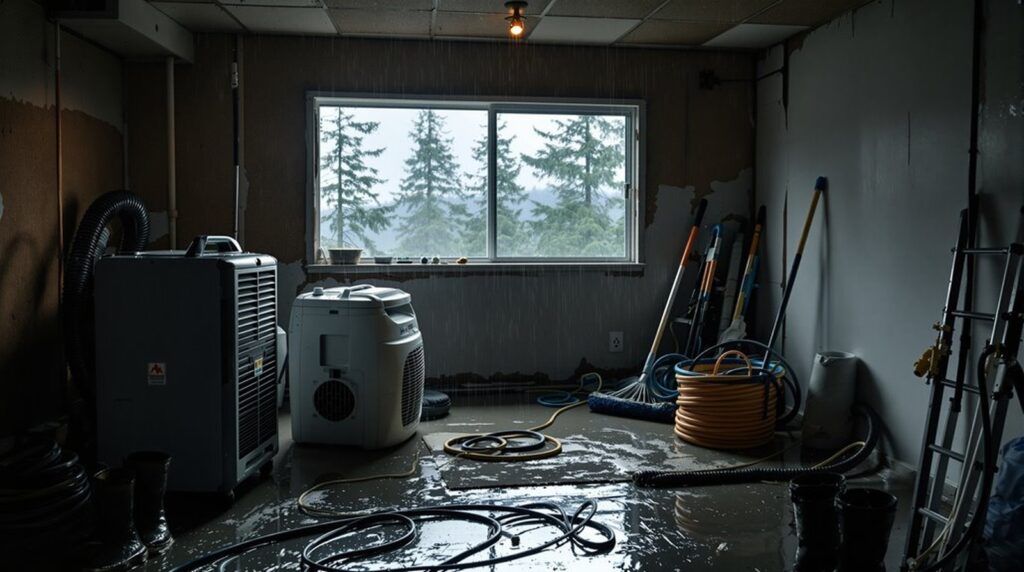
When a basement floods, the choice between DIY methods and professional equipment often determines whether the space fully recovers or faces hidden water damage later on.
Basements may appear dry after surface water is cleared, but paint bubbling or wall staining can occur weeks afterwards. A box fan and a small dehumidifier cannot remove the deep moisture that often lingers in BC homes. Water seepage into wall cavities and under floors continues to cause problems if it is not handled properly.
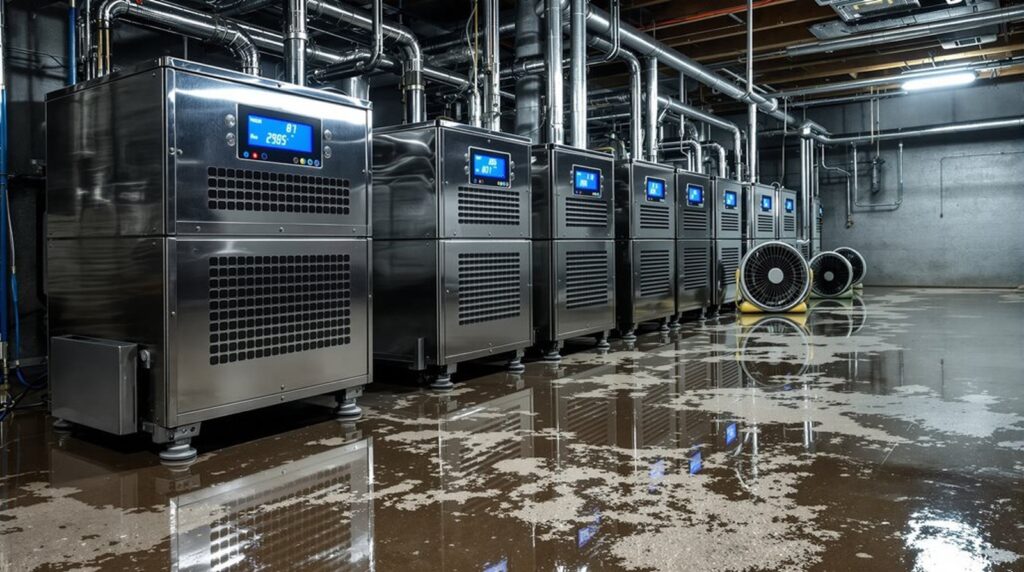
The greatest risk comes from what cannot be seen. While a household dehumidifier is running, trapped water remains inside materials, creating conditions for mould growth and structural weakening. Professional drying systems have the capacity to draw out this hidden moisture.
Why DIY Drying Methods Fall Short in Flooded Basements
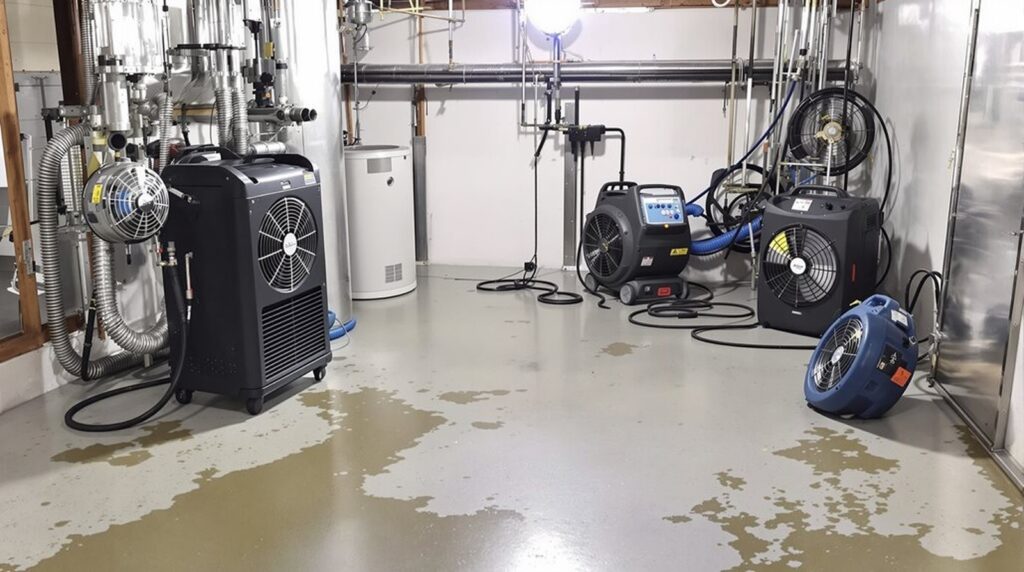
DIY drying rarely succeeds in removing all the moisture. Fans and shop dehumidifiers may dry the surface, but dampness stays inside walls and under flooring. Basements are especially difficult with their limited airflow and constant humidity. Industrial extraction systems and moisture detection tools are designed to reach areas that household devices cannot. This difference is what prevents recurring mould and structural issues.
Faster Moisture Removal
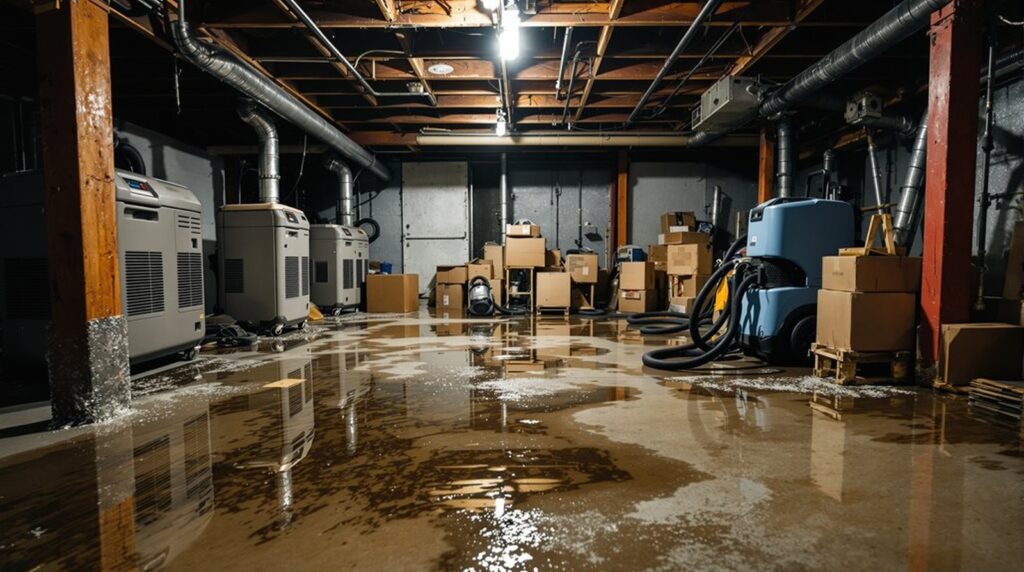
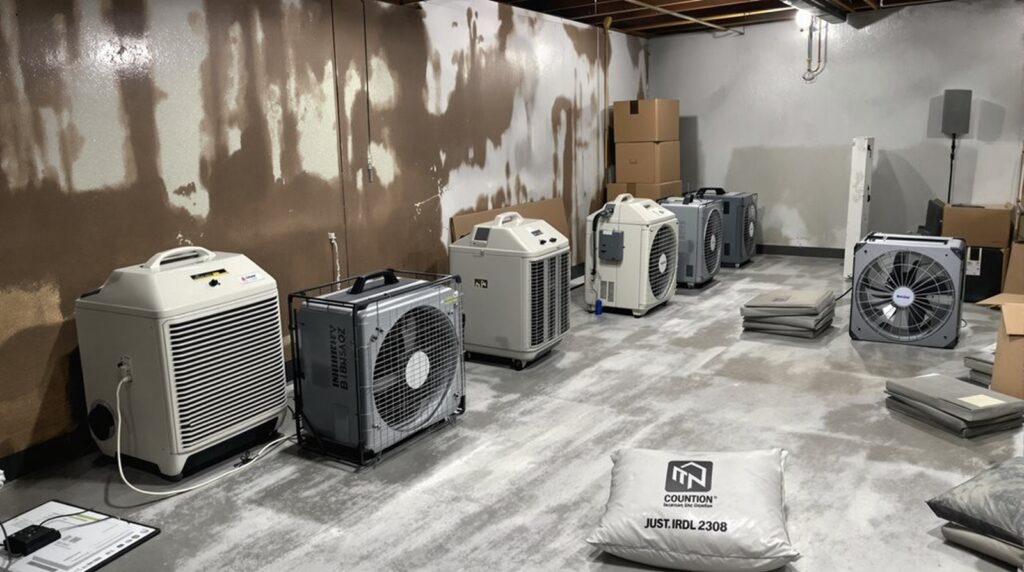
Industrial dehumidifiers can reduce drying time by around 75%. Rather than only drying surfaces, they remove water from wall cavities, flooring, and the air. Faster moisture removal helps limit mould growth and reduces the time the basement remains unusable.
What Professional-Grade Equipment Can Achieve That DIY Can’t
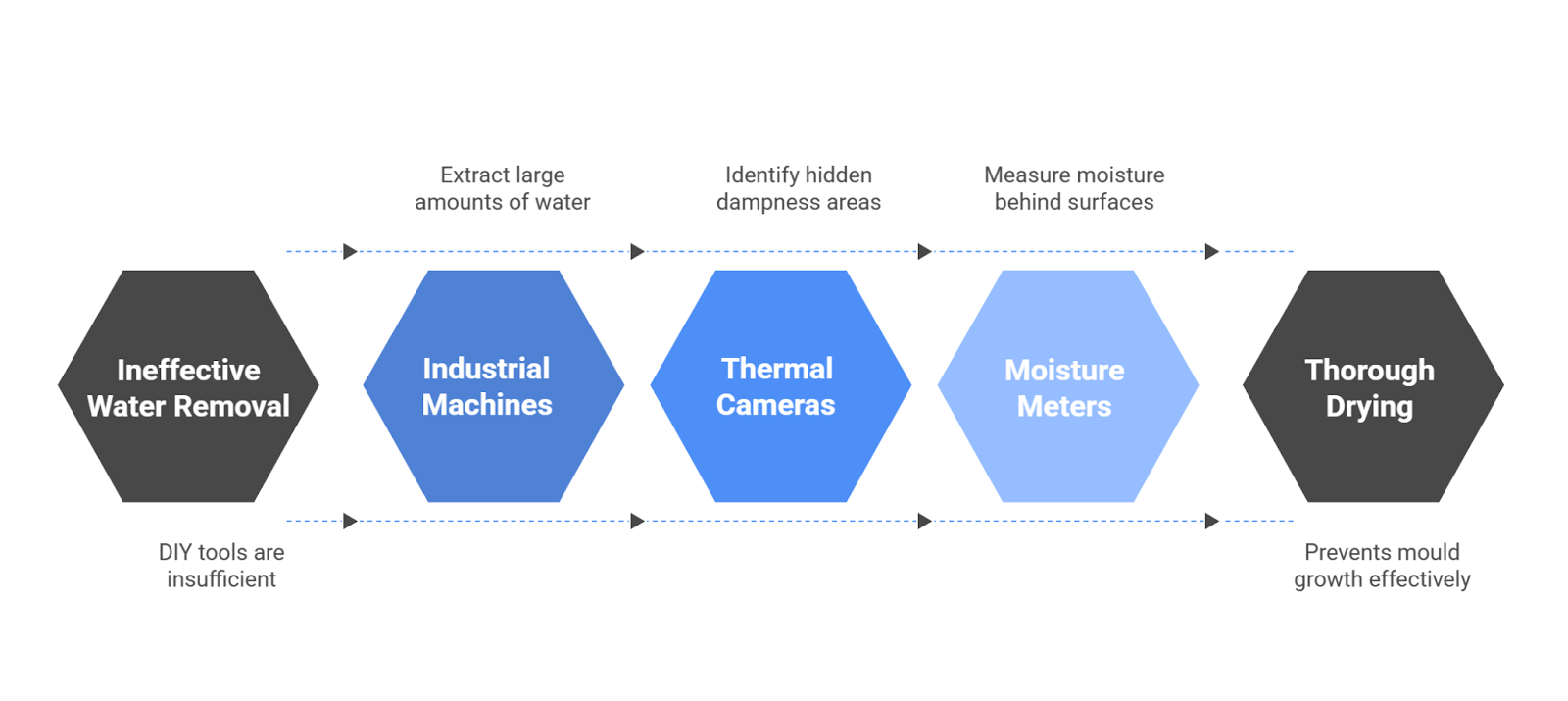
Professional equipment can remove water far more effectively. Industrial machines can extract up to 100 gallons per day and operate continuously. Thermal cameras and moisture metres identify dampness behind walls and under floors that DIY tools cannot reach. This thorough drying is particularly important in humid climates where mould grows quickly.
Precision Moisture Detection
Moisture detection is another area where professional equipment differs. Moisture metres identify dampness in building materials, and thermal cameras highlight water trapped behind plasterboard. Mapping each room in real time shows where drying is still needed. Final scans confirm when the basement is fully dry.
How Climate in Canada’s West Coast Impacts Drying Decisions
On the West Coast, high humidity slows evaporation. Household fans and dehumidifiers struggle because the moisture does not disperse quickly. Industrial drying systems are necessary to maintain air movement, measure moisture levels accurately, and reduce the chance of mould growth in this environment.
| Risk | What Happens |
|---|---|
| Mould growth | Harms indoor air quality and can trigger allergies or respiratory issues |
| Structural damage | Wooden studs, flooring, and drywall begin to rot and may warp |
| Missed dampness | Hidden water pockets behind walls or under floors aren’t picked up by DIY tools |
| Insurance problems | Claims may be denied without proper moisture logs and drying records |
| Safety hazards | Increased risk of electrical faults, slips, and exposure to contaminants |
Hidden Costs and Risks of Incomplete Basement Drying
Leaving dampness behind often leads to issues we see in B.C. homes:
- Mould growth that harms indoor air quality and may trigger health symptoms
- Rot in wooden studs, flooring, and drywall
- Hidden dampness that basic DIY tools miss
- Possible refusal of insurance claims if drying isn’t properly documented
- Higher safety risks, including electrical hazards
When to Call in Experts Even if You Started With DIY
Know when to bring in the professionals
Don’t risk it, even if you started the drying process yourself, hidden moisture or contaminated water can wreck everything and threaten your health. We understand choosing between DIY and professional help isn’t only about money, it’s about safety. When mould appears, floors start sagging, or the water’s contaminated, we would suggest bringing in the experts. They have the equipment, documentation, and skills. Better to be safe than sorry.
Questions Often Asked
What Is the Best Way to Dry Out a Flooded Basement
Flooded basements should be dried with a combination of water extraction, industrial fans, and moisture detection equipment. Acting quickly reduces the chance of mould growth and lowers the risk of structural damage.
How to Dehumidify a Basement After Flooding?
A large-capacity dehumidifier, run continuously for at least 48 hours, helps reduce moisture. Positioning it away from walls and adding fans for circulation improves results.
How Long Does It Take to Dry Out a Basement After a Flood?
Professional drying usually takes 3–5 days, while DIY attempts can take weeks. The timeline depends on the amount of water, the materials involved, and the climate.
How Fast Does Mould Grow After a Basement Flood?
Mould starts growing within 24 to 48 hours once floodwater settles in your basement. We can’t afford to wait around; quick action is everything because wet spaces create perfect conditions for mould. We need to move fast before spores multiply and cause serious damage to your property.