
After a fire in Surrey, the smoke odour can linger long after the flames are out. Soot, ash, and the chemical residues left behind settle deep into walls, carpets, furniture, and ductwork, and they keep off-gassing for weeks. We know how frustrating that persistent smell can be. The good news is you can tackle it with the right approach. Let’s walk through how fire restoration actually works, and when it’s time to call in a professional.
What DIY Basement Drying Usually Involves
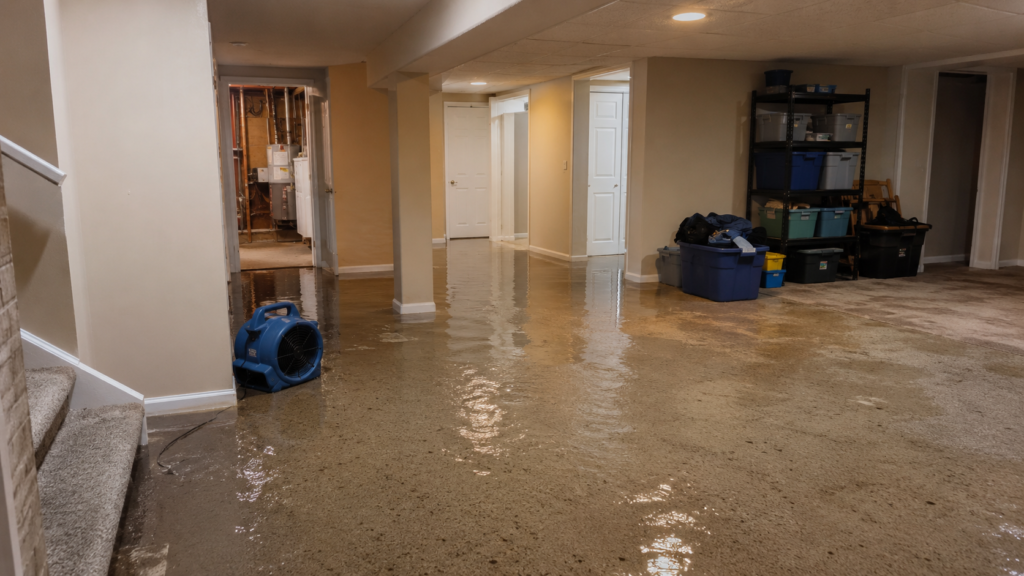
Most homeowners reach for the same basic setup after a disaster has occurred, opening a few windows, pointing fans at the wet areas, and running a dehumidifier from Home Depot. This type of method only works if you catch the water quickly and there’s just a small amount of it. However, a box fan and dehumidifier can only do so much once the flooding is bigger than a small spill, since a fan moves air across the surface but doesn’t pull moisture out of drywall, subfloor, or the wood framing underneath your flooring.
Why Basements Are Hard To Dry On Your Own
Basements give you a harder time in ways other rooms don’t, since they sit below ground level, meaning there’s less natural airflow and higher humidity to begin with, even on a dry day. Once a flood adds to that, a household dehumidifier is often working against conditions it was never built for.
Water works its way into the holes in the walls, under flooring, and behind baseboards, often sitting there for weeks without anyone knowing it’s there. That trapped moisture keeps damaging materials long after the surface looks fine, weakening drywall, warping wood, and setting the stage for mould, which can start growing in as little as 24 to 48 hours once conditions are right.
What Professional Equipment Does Differently
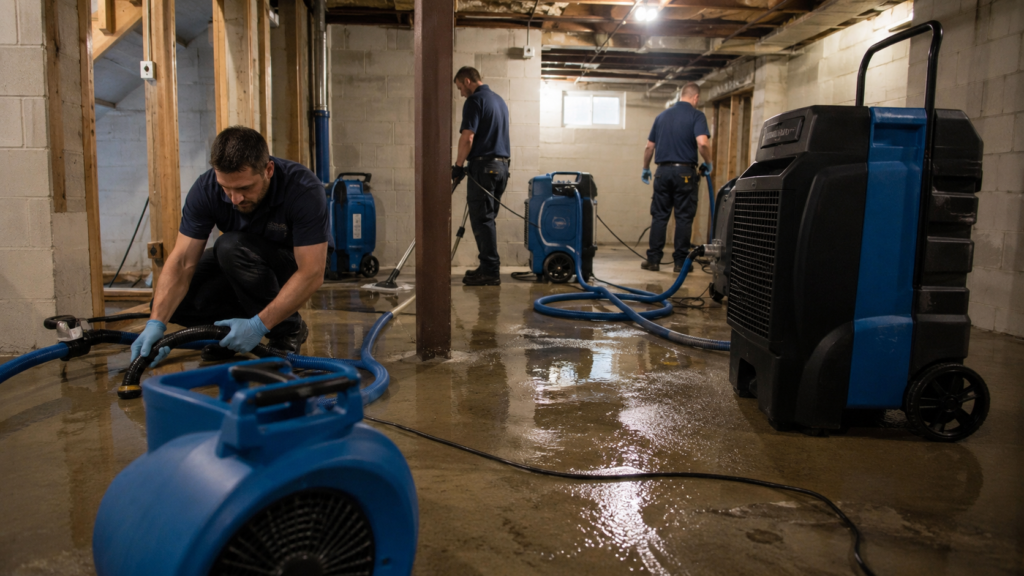
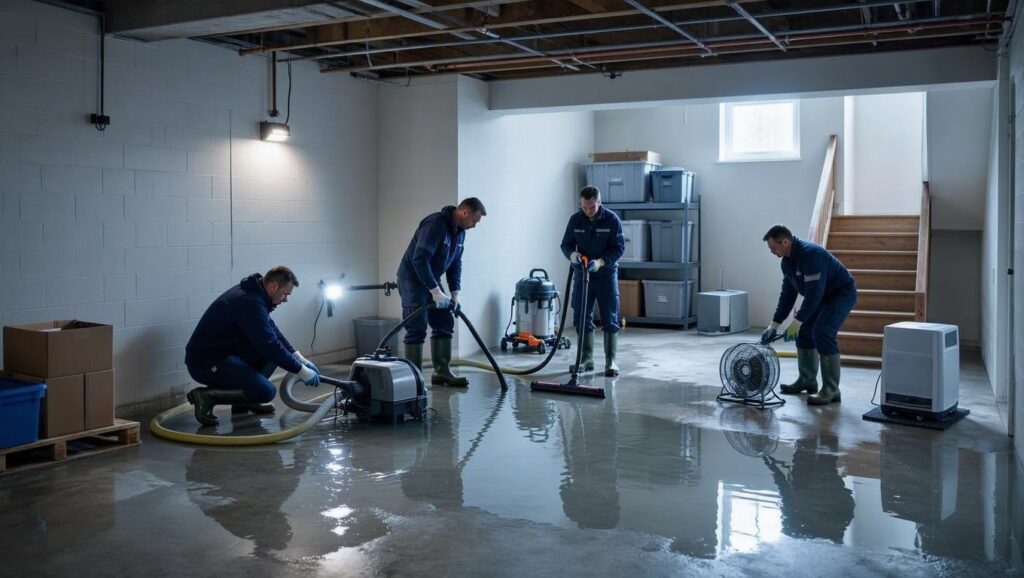
Professional equipment doesn’t just move air around; it can also pull moisture out of the materials themselves and find water hiding behind walls and under floors that DIY tools can’t detect. At Taylor Restoration, that’s the gap between a basement that looks dry and one that actually is.
DIY vs. Professional Drying: A Quick Comparison
The difference comes down to equipment, detection, and time.
| Category | DIY Drying | Professional Drying |
| Equipment | Box fans, hardware store dehumidifier, wet/dry shop vac | Industrial air movers, commercial dehumidifiers, and extraction pumps |
| Hidden moisture | No reliable way to check without opening up walls | Moisture meters and thermal imaging find water you can’t see |
| Timeline | A week or more | Usually 3 to 5 days |
| Documentation | Your own notes | Professional moisture logs and reports |
That documentation matters if you’re planning to file an insurance claim.
When DIY Might Be Enough
DIY drying can be the right call in some situations if you catch a small spill fast. For example, if a leaking hose or a minor appliance overflow results in clean water rather than sewage or groundwater, a fan and dehumidifier running for a day or two might be enough. Just keep an eye on the area over the following weeks for any musty smell, discolouration, or soft spots, since those are signs that moisture is still hiding somewhere.
When to Call in the Professionals
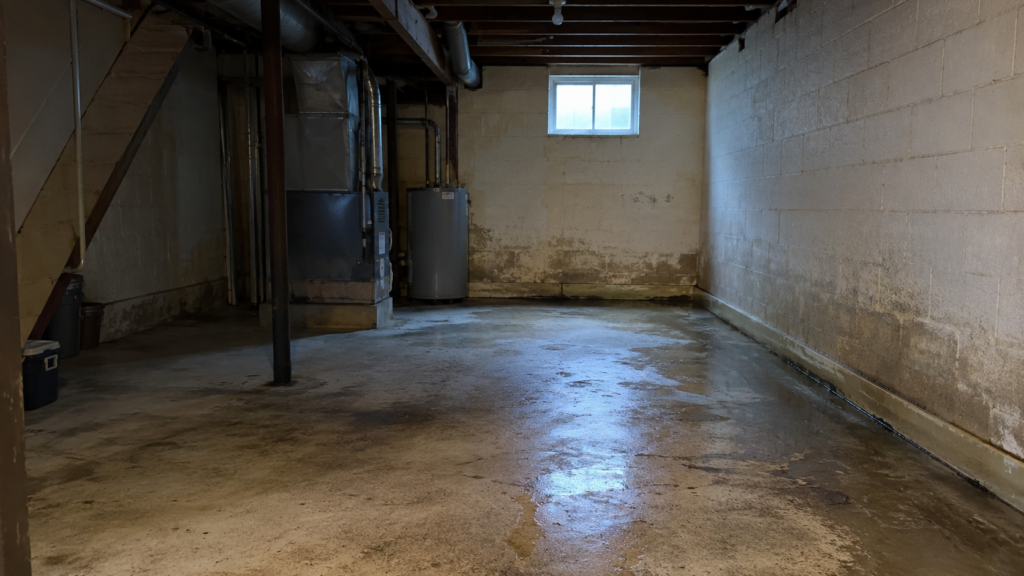
If the water covers a large area, comes from a sewer backup or outdoor flooding, or has been sitting for more than a day or two, it’s time to bring in a flooded-basement specialist. The same goes for musty smells that won’t go away, sagging or soft flooring, or water-damaged belongings that need contents restoration.
Taylor Restoration has been drying out Lower Mainland basements since 2006, and our team is IICRC-certified, bonded, and insured. We’re available 24/7 at (604) 619-0559 because water damage doesn’t wait for business hours, and neither do we.
Frequently Asked Questions
How Long Does It Take to Dry a Basement After a Flood?
Usually 3 to 5 days with professional equipment. DIY setups with fans and a household dehumidifier often take a week or longer and don’t always get everything dry.
How Do I Know If My Basement Is Fully Dry?
We check materials like drywall, subfloor, and framing with moisture meters throughout the process, since surfaces can feel dry while moisture stays trapped underneath for weeks.
Will My Insurance Cover Professional Basement Drying?
Coverage depends on your specific policy and how the flooding happened, so it’s worth contacting your insurer directly. We document the damage and drying process thoroughly to help your claim move smoothly, and if your insurer tries to steer you toward their own preferred company, know that you’re free to choose whoever you trust.
Can I Rent the Same Equipment Professionals Use?
Some rental companies carry commercial dehumidifiers, but the moisture detection tools and experience that go with them are harder to come by. Renting the machine is only half the job. Knowing where to point it and when the work is actually done is the other half.
How Soon Should I Start Drying After A Flood?
Right away. The longer water sits, the deeper it soaks into drywall, subfloor, and framing, and the harder and more expensive the cleanup becomes. Even if you’re planning to call in help, getting standing water out early makes a real difference.