
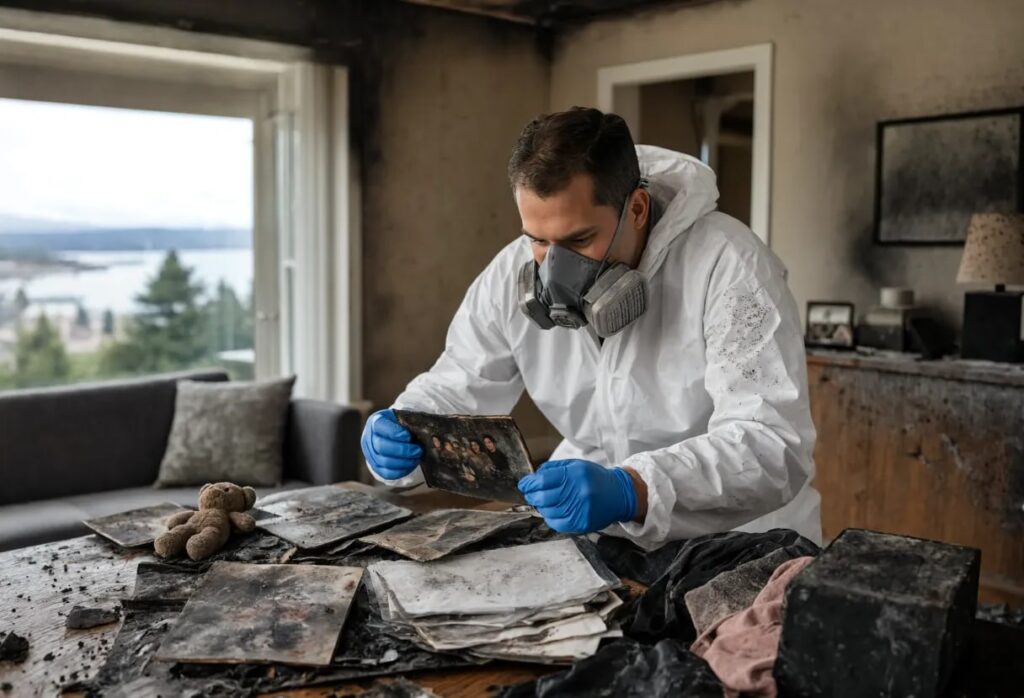
After a fire in your White Rock home, the structure is often the first concern. Families usually feel the loss of irreplaceable photographs, documents and personal belongings most deeply. We have seen items written off even though they could still have been restored, and we have seen recoverable belongings damaged during the first day by well-meaning cleaning. The steps taken in the days after a fire often matter more than how close an item was to the flames.
Resist the Urge to Start Cleaning
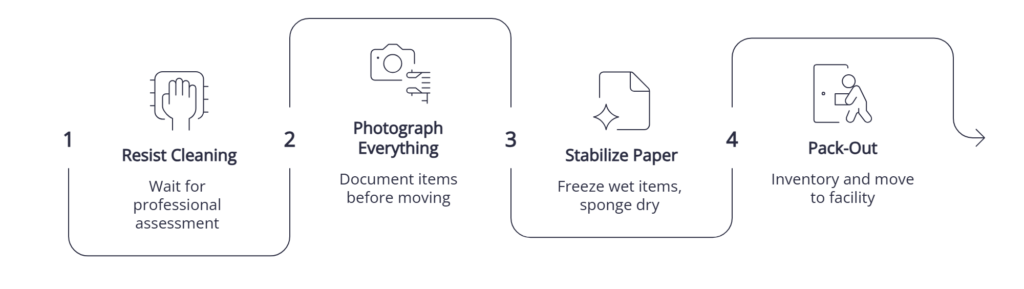
The first instinct after a fire is often to wipe things down, but that can cause lasting harm because soot is both abrasive and acidic. Rubbing it across a photograph, a painted surface, or a polished finish grinds the residue into the material, turning a cleanable item into a permanent stain. Wait until the property has been cleared for entry, wear gloves and a fitted respirator if you go in at all, and leave items where they sit. Photograph everything before anything moves.
Why Soot Keeps Working After the Fire Is Out
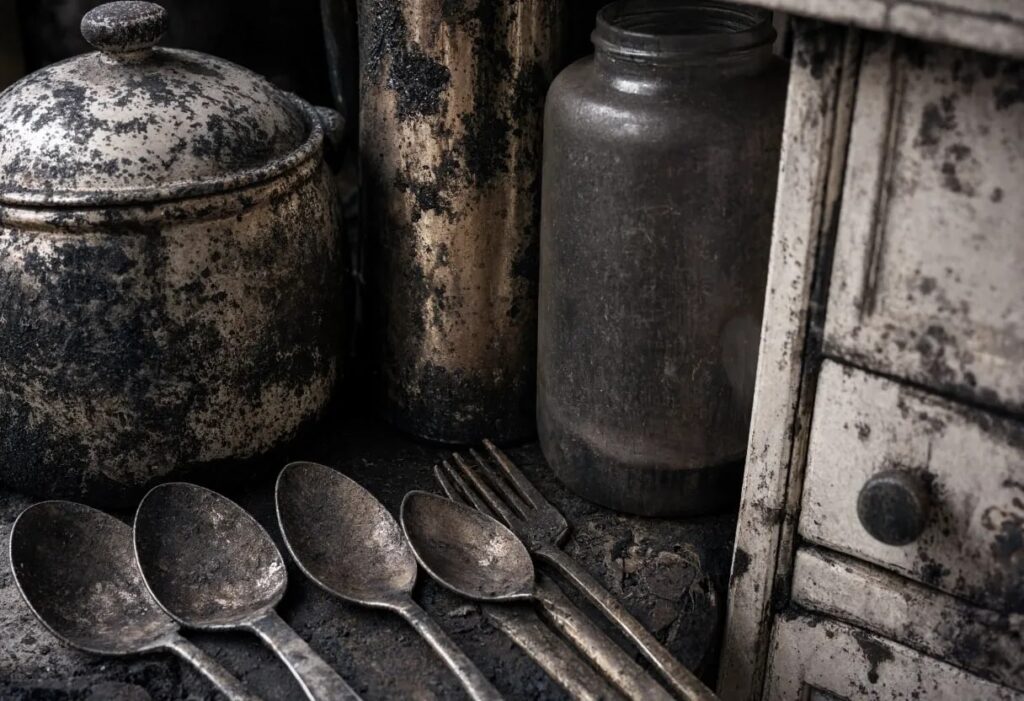
Fire damage does not stop when the flames are out. Soot can continue to damage metal, glass, plastics, and finishes for days, causing chrome to yellow and silver to tarnish after even a small kitchen fire.
The type of smoke matters too. Low-temperature smouldering fires produce wet smoke, a sticky residue that coats surfaces and warps paper and book bindings, while fast-burning, high-temperature fires produce dry smoke, a fine powder that drives deep into porous materials. Each type of smoke requires a different cleaning method, and using the wrong one can make the damage permanent.
Photographs, Documents and Books Cannot Wait
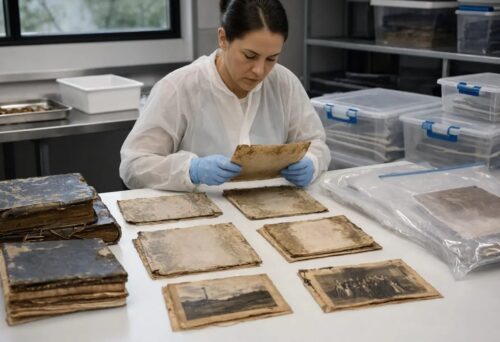
Paper items are among the most time-sensitive belongings in your home, so photographs, certificates, identity documents and books need attention quickly. If they are wet from firefighting water, mould can take hold within 24 to 48 hours, and once it reaches the emulsion on a photograph, the image is gone for good. Wet paper items can be sealed in bags and frozen, which stops the clock and buys time until they reach a restoration facility for vacuum freeze drying. Dry but sooty paper should be left alone rather than brushed, because loose soot lifts cleanly with a latex sponge in trained hands and smears permanently under a cloth.
What Can Be Restored and What Has to Go
Hard, non-porous items often have the best chance of being restored, including glass, ceramics, metal, jewellery and hardwood furniture with intact finishes.
What does not come back is anything porous that absorbed smoke deeply, or anything that goes into or onto your body. Food, medicine, cosmetics and infant items exposed to heat, smoke or firefighting water have to be discarded, since refrigerator and freezer seals are not airtight and ordinary packaging is rarely a barrier. Heavily burned mattresses, carpet underlay and upholstered foam are also past saving.
How Contents Pack-Out Works
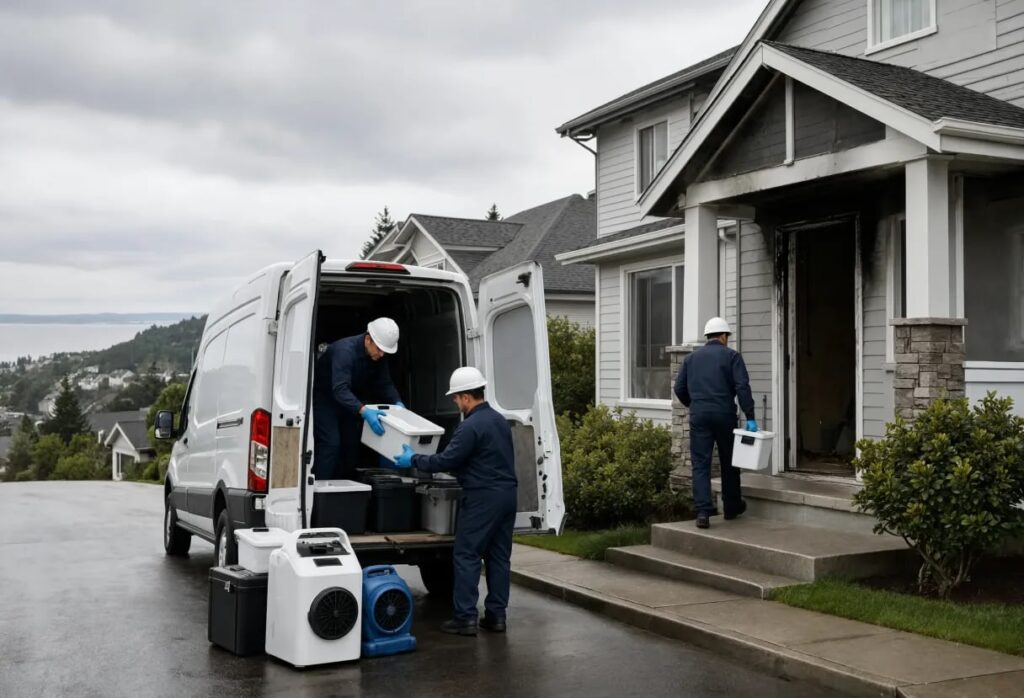
When cleaning on site is not practical, we inventory your belongings room by room, photograph their condition, and pack them out to a controlled facility. Every item is logged so you and your adjuster can see exactly what left the house and what came back. Cleaning methods are matched to the material, from HEPA vacuuming and hand cleaning through to ultrasonic baths for hard goods, and items are deodorized rather than perfumed. Restored belongings stay in storage until structural repairs are finished, so nothing returns to a house that still smells of smoke. Our contents restoration work covers this entire process and runs alongside the fire damage restoration on the building itself.
Protecting Your Contents Insurance Claim
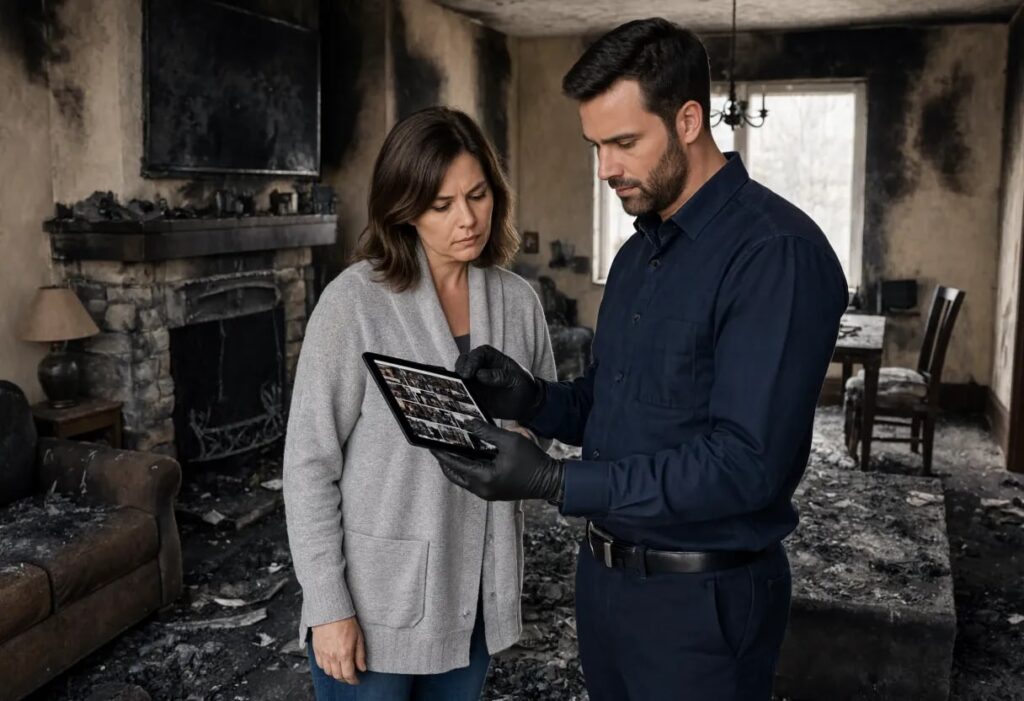
A contents insurance claim depends on clear evidence, which can be lost as soon as a damaged item is thrown away. Photograph every damaged item before it is discarded, write down what it was, and keep any receipts or records you still have. Most policies treat contents coverage separately from the structure, and many cover somewhere to stay while the home is unlivable, so ask your broker or adjuster to walk you through both. The Insurance Bureau of Canada publishes plain-language guidance on what home policies generally cover, and we supply the detailed inventory and condition reports that adjusters ask for.
Why the First Few Days Decide the Outcome
The window for saving belongings is short, and it closes quietly, since acidic residues begin etching within hours, metals corrode over the following days, and any material still holding firefighting water can grow mould inside two days. Much of this damage is not visible while it happens, which is why a home can look dirty may still contain seriously damaged belongings. Getting contents stabilized early is usually the difference between belongings that can be cleaned and belongings that are gone for good. After your call, our crew is dispatched within the hour, and the sooner we reach your belongings, the more of them come home.
Common Questions About Saving Belongings After a Fire
Can smoke-damaged photographs really be saved?
Often they can. If they are dry, loose soot can be lifted without touching the image surface, and if they are wet or stuck together, freezing them halts further loss until they can be separated and freeze-dried. What ruins photographs most often is a well-meaning attempt to wipe them or peel them apart at home.
Should I throw out food and medicine after a fire?
Anything you eat or apply to your body that was exposed to heat, smoke, soot or firefighting water should be discarded, including sealed packaging and refrigerated items, because appliance seals do not keep smoke out. Photograph it all before disposal so it can still go on your claim.
Will my insurance cover contents restoration?
Most home policies include contents coverage, though limits and exclusions vary by policy, so contact your broker or adjuster to confirm what applies to yours. Insurers generally support contents cleaning where restoration is possible, so it is worth asking what your policy allows before anything is written off.
Can I choose my own restoration company?
Generally, you can. Insurers often suggest a preferred vendor, but homeowners are usually free to choose their own contractor, though it is worth confirming the terms with your broker or adjuster before work begins, since policies differ. Several of our White Rock clients came to us after being handed a list and asking whether they were required to use it.