
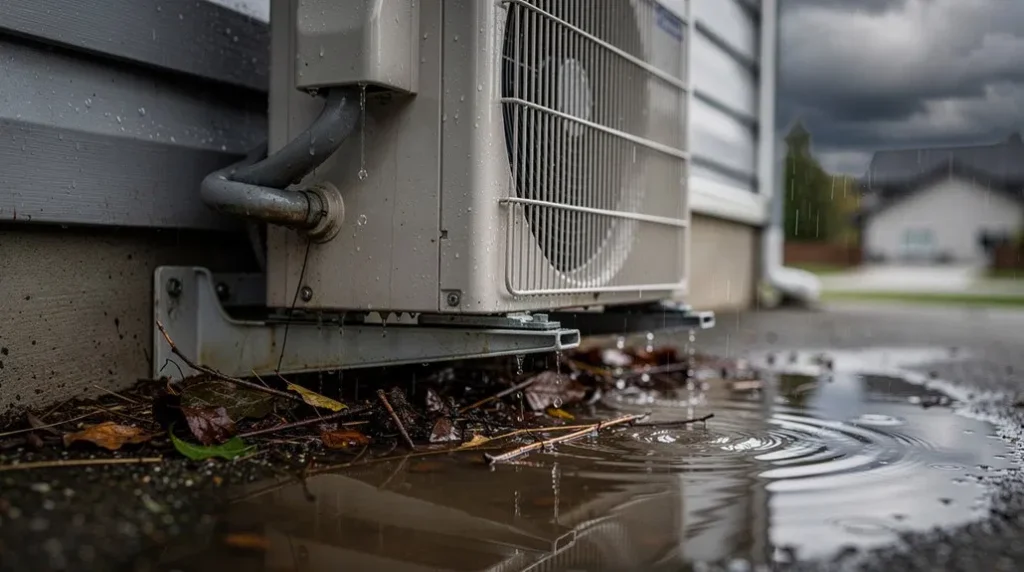
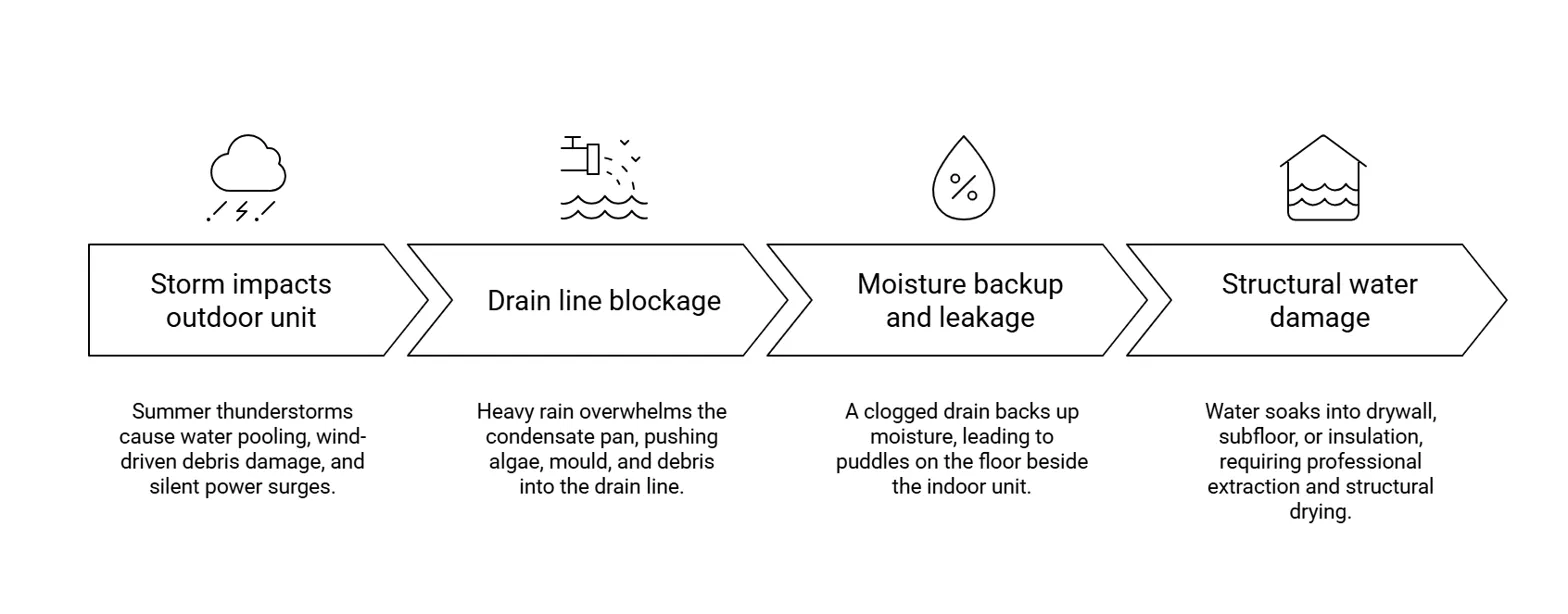
When summer thunderstorms roll through Langley, they don’t just rattle windows; they set off a chain reaction that can leave your AC leaking days later. Water pools around outdoor units, while wind-driven debris dents coils and kinks lines. Power surges do their damage silently, without any outward signs. Together, this wear and tear creates hairline cracks and drainage blockages, which eventually show up as puddles on the floor beside your indoor unit.
How Heavy Rain Clogs Your AC Drain Line
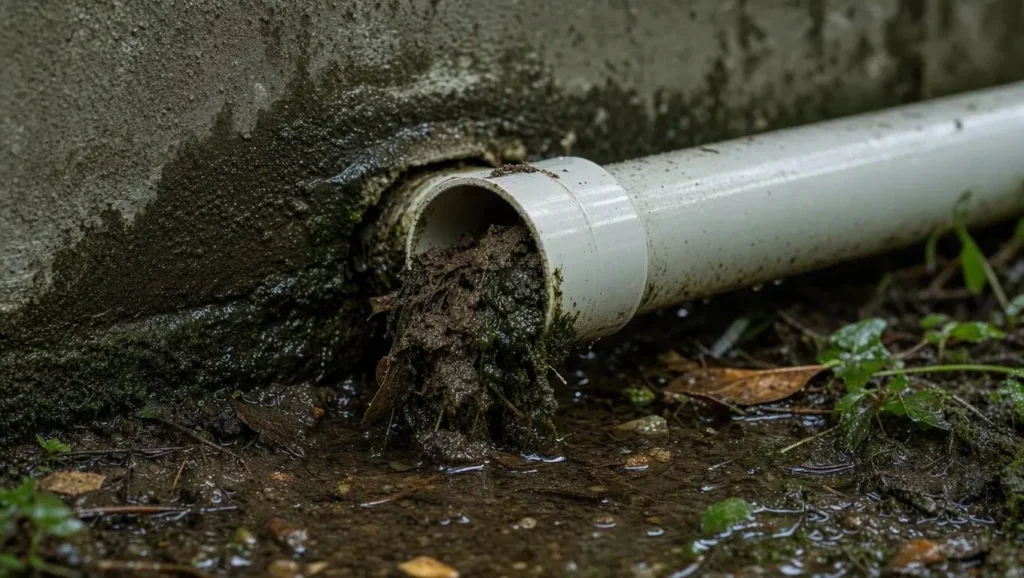
Because heavy summer rain can overwhelm the condensate pan faster than it drains, excess water often pushes straight into the drain line, carrying loosened algae, mould, and biofilm along with it. Storm debris adds to the buildup, and a clogged drain quickly backs up moisture, raising indoor humidity. We recommend checking your line after every storm to keep your home protected and comfortable.
Fixing a Clogged Drain Line and Stopping Water Pooling
Once a storm passes, the outdoor condensate drain line is the first thing to check. Clearing what you can see and making sure the ground slopes away from the pad will handle the simple cases, and an HVAC technician can take it from there if the line stays blocked or if water is showing up around the indoor air handler. What we handle is everything the water touched on the way through your home. Once it has soaked into drywall, subfloor or insulation, drying it properly is a separate job from fixing the equipment, and it is the part that decides whether this stays a small repair or turns into a much bigger one. That is where our water damage restoration comes in.
Spotting a Refrigerant or Coil Leak Before It Spreads
After high winds or hail move through, we inspect the condenser fins and coil tubing for bends or dents, since even a hairline crack can bleed refrigerant for days before you notice a problem. Here are the warning signs to watch out for:
– Weak airflow or slower cooling
– Oily residue near refrigerant lines
– Short cycling or startup trouble
Don’t tackle sealed lines yourself; let our trained techs help.
Protecting Your Langley AC With Leak Repair and Maintenance
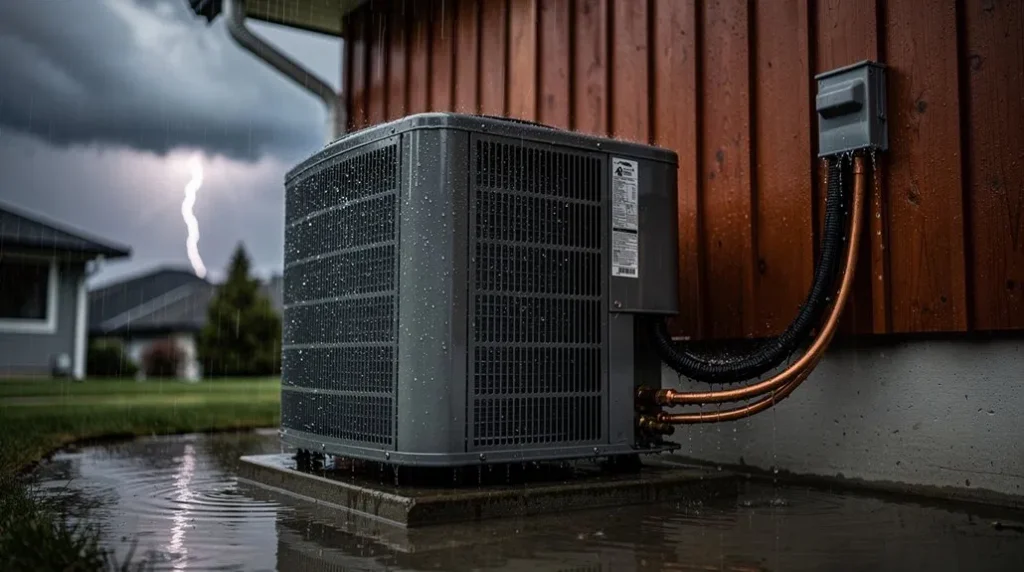
When a storm rolls through Langley, we treat your home like it has been through a workout, checking every wall cavity, subfloor, and ceiling below for hidden moisture. We protect your drywall and your flooring with fast extraction, structural drying, and prompt moisture checks.
Regular monitoring catches damp insulation early, keeping things dry all season long. When a leak has already reached the floor, you can count on us to handle restoring damaged belongings that the water touched on its way through.
Questions Often Asked
How Far Away Can an AC Unit Be From a House?
We recommend keeping your unit 1-3 feet from your wall, with 2+ feet of clearance around intake sides. This helps our Langley neighbours avoid storm debris buildup, airflow issues, and hidden leak damage.
What Is the 3 Minute Rule for Air Conditioners?
We recommend waiting 3 minutes before restarting your AC after it shuts off, letting refrigerant pressure equalize. This protects your compressor from storm-related power fluctuations, keeping your Langley home’s system running safely and reliably all summer.
Can Neighbours Complain About Air Conditioning?
Yes, neighbours can complain if your AC leaks onto shared walkways, patios, or yards. We recommend clearing clogged drain lines and scheduling prompt repairs. Keeping water contained protects your home, and catching it early keeps the water on your side rather than theirs.