
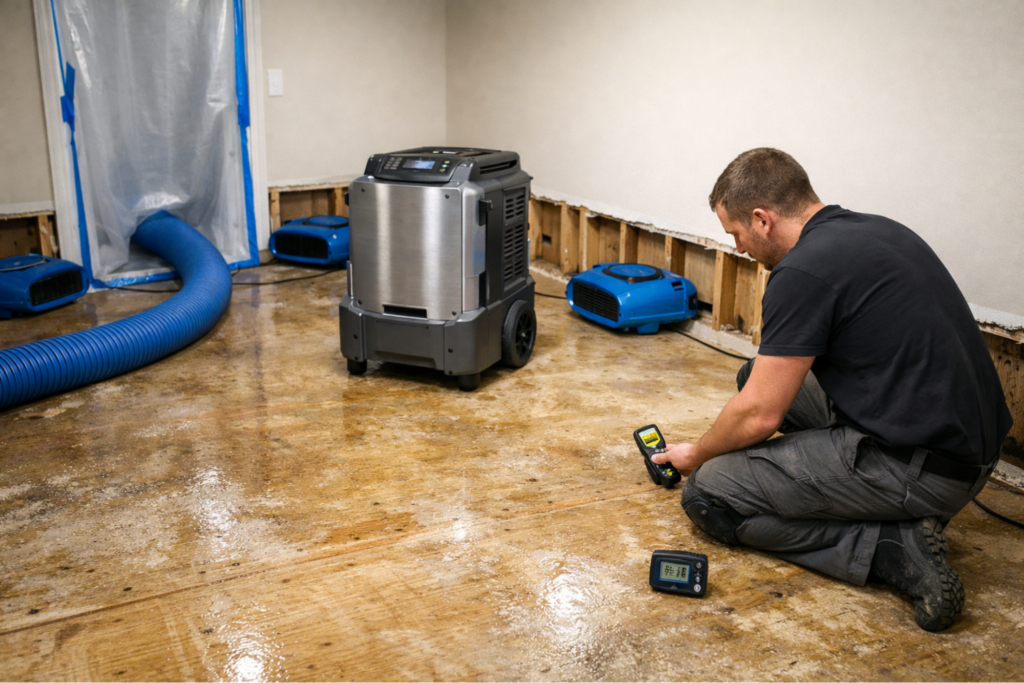
When water floods your Langley home, you need to act fast. Those first 24 hours determine whether you are looking at a quick cleanup or months of repairs and mould problems. We have seen too many people lose thousands because they waited even a day to call for help. Mould grows fast; drywall soaks up water like a sponge; and your insurance company needs immediate documentation. Here is exactly what we do when you call, and why waiting is not an option.
What Happens When You Call for Langley Water Damage Help?
The second you hang up the phone, we’re already on the move. Our IICRC-certified crew aims to get to your Langley property on the same day. First thing we do? Address the water source and shut off electricity to any flooded areas. Nobody’s getting electrocuted on our watch, as safety is our priority. While you’re still catching your breath, we’ll have cameras ready and start the water damage restoration documentation your insurance company will need. Then the real work starts; we bring out the pumps, get the dehumidifiers running and tell you exactly what comes next: a very straight-to-the-point process.
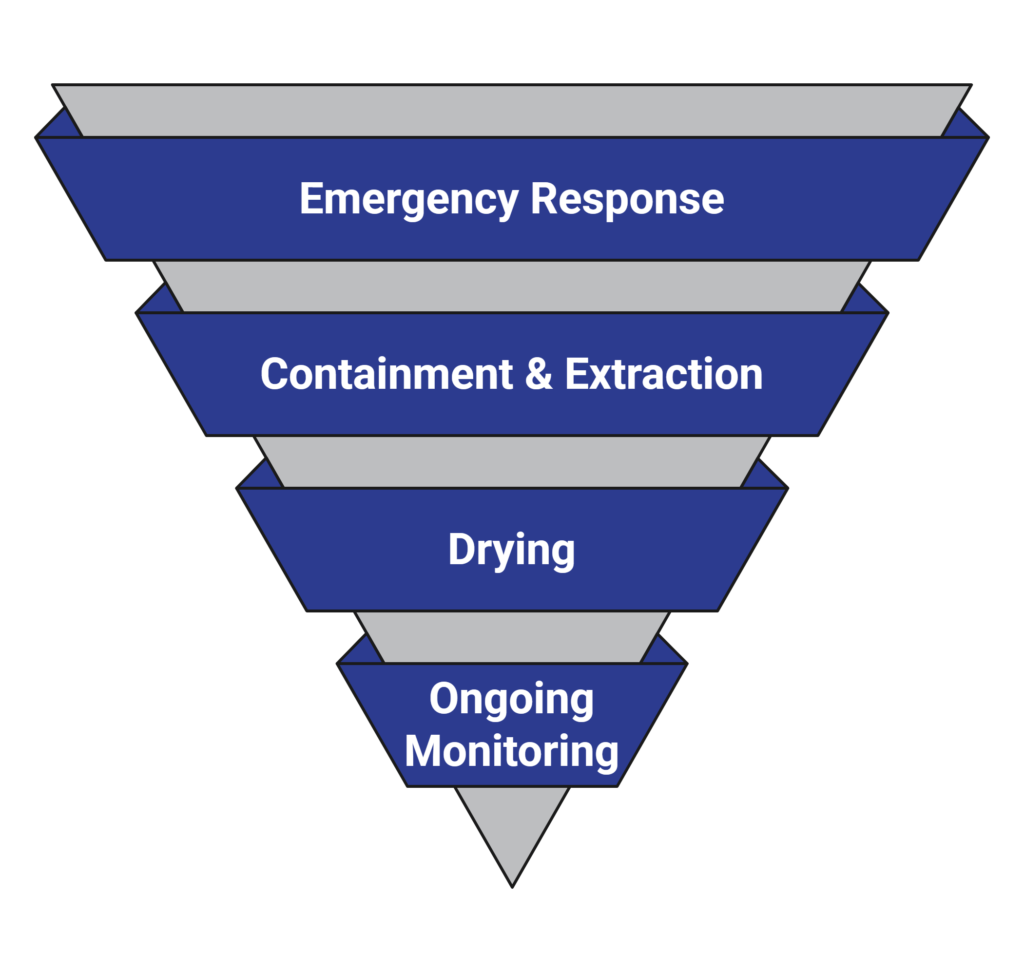
Then we get to work:
- We shut off your main water valve
- We flip circuit breakers for wet areas
- We put up plastic sheeting to stop water from spreading to dry rooms
- We log moisture readings every few hours
You know what is happening every step of the way.
How Technicians Assess and Contain the Damage
In the first 15 minutes of our arrival, we scan your walls, floors, and ceilings using moisture meters and infrared cameras. Water hides where you cannot see it: behind the plaster, under the floorboards or inside the walls. We classify what we find into Category 1, 2 or 3: clean water from your pipes, greywater from your appliances, or nasty sewage you do not want near your family. That tells us how hard we need to hit it.
Water Extraction, Drying, and Mould Prevention in Langley
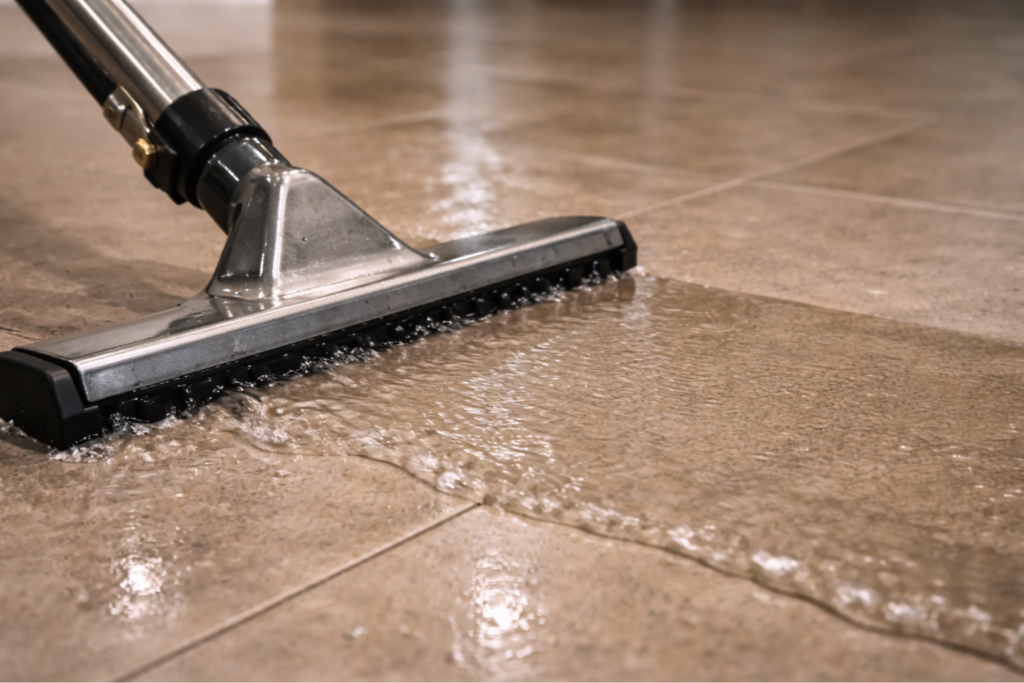
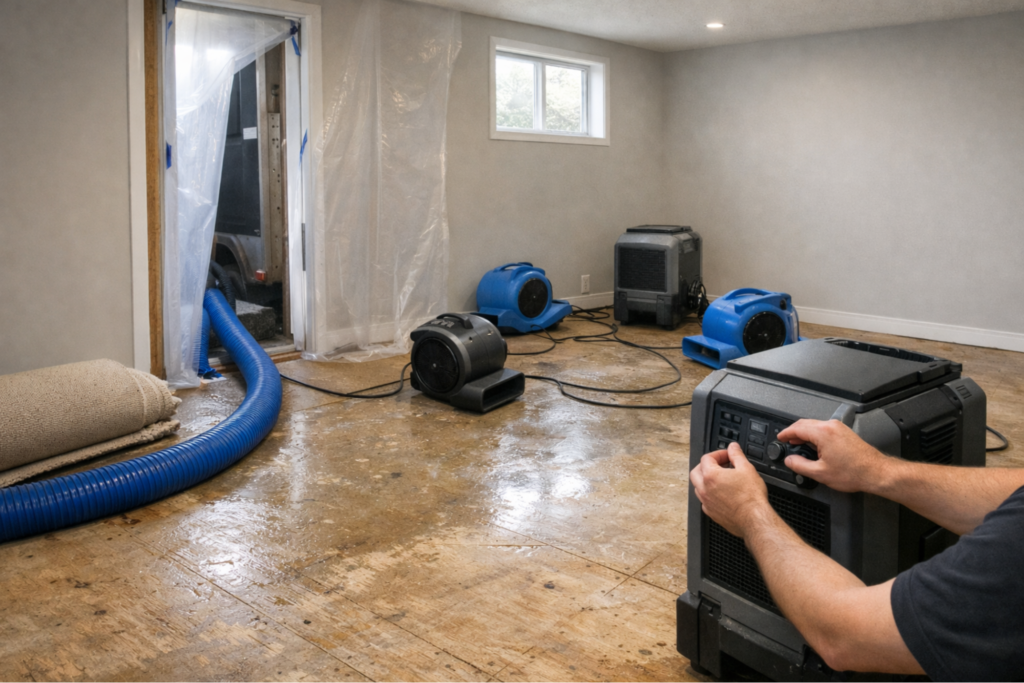
We extract up to 5,000 gallons per hour with our truck pumps because we understand how quickly standing water gets removed determines whether your home dries out cleanly or develops secondary damage. Your flooded basement dries in less time than it takes to watch a film, but getting the water out is just the beginning. Wood, drywall, and insulation hold moisture like a sponge, so we run industrial dehumidifiers continuously until we bring levels down to 12% or lower within 24 hours.
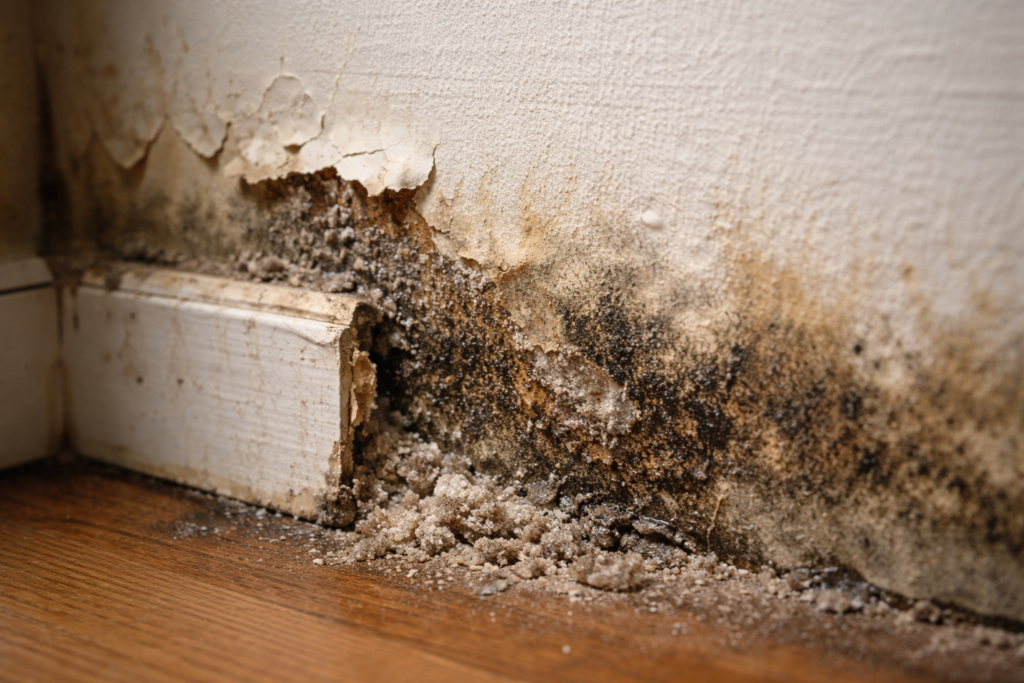
We work urgently because mould spores begin to colonize within 48 hours. Once they settle in, you are looking at a completely different problem. That is why we treat everything with antimicrobial solutions before the area is even fully dry. We don’t just clean up water and call it a day; we are making sure mould removal doesn’t have to be an option.
What Gets Documented for Your Insurance Claim?
Getting your home dry matters, but getting paid by your insurance company matters just as much. We document everything because we’ve seen too many claims get denied over missing paperwork or incomplete records. You’ll receive a complete file that includes:
- Photos and videos of every damaged room, taken before we touch anything and again after we finish the work
- A detailed inventory of everything that got damaged; furniture, electronics, and personal items, with contents restoration options and replacement values
- Moisture readings logged by room with exact percentages, locations, and timestamps
- Signed reports from our crew showing when we arrived, what work we performed, and how long each phase took
Why the First 24 Hours Set Your Repair Costs
When water sits in your home for just 12 hours, your drywall soaks up roughly 30% of its own weight; at that point, it is ruined and needs replacing, which adds $2,500 to $4,000 just for the drywall alone. If you wait a full 24 hours, mould starts growing in the damp materials; when your insurance company sees that delay on the timeline, they can cut your payout by 20% or more because you allowed preventable secondary damage to occur.
We have seen this scenario play out too many times. A homeowner thinks they can mop up the water themselves, waits until the weekend is over to call us, and ends up paying for half the repairs out of their own pocket. Speed is not just about saving the structure of your house; it is about protecting your wallet from costs that spiral out of control.
Questions Often Asked
How Long Does It Take for Water Damage to Take Effect?
Hardwood floors begin to cup within four to six hours after water exposure. Live electrical hazards can develop in as little as 30 minutes when wires sit in water. Mould spores begin colonizing your walls and other porous materials within 24 hours of getting wet. Water moves fast through building materials, and the damage it causes moves even faster if you don’t act immediately.
How Long Does It Take for Water Damage to Cause Mold?
Mould spores need about 24 hours to grow in damp materials and another 24 to 48 hours before you can actually see growth appearing on surfaces. By the time you spot visible mould, it’s already spread further than you think into hidden areas. That’s exactly why we treat everything within the first 24 hours: we run dehumidifiers at full capacity, apply antimicrobial spray to every affected surface, and check moisture levels every few hours. We dry everything out before mould ever gets a chance to establish itself.
How to Tell if Water Damage Is Serious?
When our moisture metres read above 15%, you’re in the danger zone where mould will start growing within 48 hours. We’re also looking for drywall that’s soaked more than an inch deep, musty odours that shouldn’t be present, floors or walls that are warping or buckling, and any standing water near electrical outlets or panels. If you’re seeing or smelling any of these warning signs, you need professional help right now, not tomorrow or next week.
How Long Does It Take to Repair Water Damage?
Most water damage jobs take between 7 and 14 days from the initial call to final completion, depending on how severe the damage is. We’ll get the moisture under control during the first 24 to 72 hours, then spend the next 5 to 10 business days rebuilding drywall, replacing flooring, and repairing whatever else got damaged. Larger jobs with extensive structural damage take longer, but you’ll know the complete timeline before we start any work.